
Featured Alum: Will Krueger (‘18)
Since 1973 the Coro Fellows Program in St. Louis has developed civic leaders by immersing them in rigorous, experiential, and community-based leadership training that prepares them to contribute to the health and sustainability of our country’s democratic processes. Read this feature to learn how this alum utilizes Coro tools and experiences in their career.
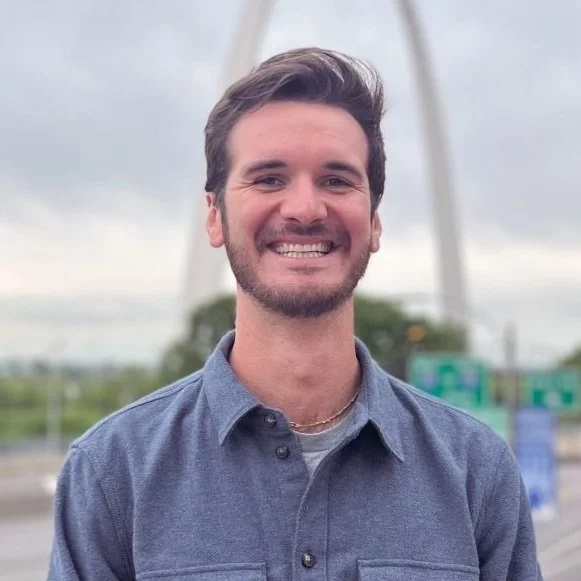
Will Krueger, ‘18
Attorney
ArchCity Defenders
Will Krueger is an eviction defense attorney and tenant organizer at ArchCity Defenders in St. Louis. He has worked on more than a dozen federal, state, and local electoral campaigns in organizing and voter protection. He graduated from Yale Law School in 2024 and Washington University in St. Louis in 2017. He loves baseball, bicycles, St. Louis history, scuba diving, and Bob Dylan.
Note: answers have been edited for clarity.
What factors led you to pursue the Coro Fellows Program in St. Louis?
[WILL KRUEGER] I went to school in St. Louis at Washington University, and I loved St. Louis. I was involved in politics here, working on progressive organizing, and for city elected officials, and I wanted to continue that type of work that I felt was community-oriented, meaningful, and values-driven. I didn't know the best way to do that until I found the Coro Fellows Program, which struck me as a perfect opportunity. It was going to give me incredible access to political leaders, political shapers, everyday people and hardworking St. Louisans to learn as much as I possibly could about the city.
I don't think there's any other way to learn as much about the region in such a short time than the Coro Fellows Program. It was going to give me a great depth of experience through the interviews and through the cohort aspect, but also an incredible width or breadth of experience by shifting through so many placements and learning from so many different people's perspectives. It was going to introduce me to 11 other extremely bright, committed, excited young people who cared about public affairs and wanted to make our public life a little bit more productive, a little bit more useful, a little bit more fair, a little bit more equal, and a little bit more logical.
So it seemed like a perfect opportunity, and it really delivered on each of the promises that it made, and in fact, over-delivered. I feel like I got so much out of my Coro experience. Exactly the things I was hoping to get out of it, and so many more that I couldn't have ever known to expect.
What was the most impactful experience you had while in Coro?
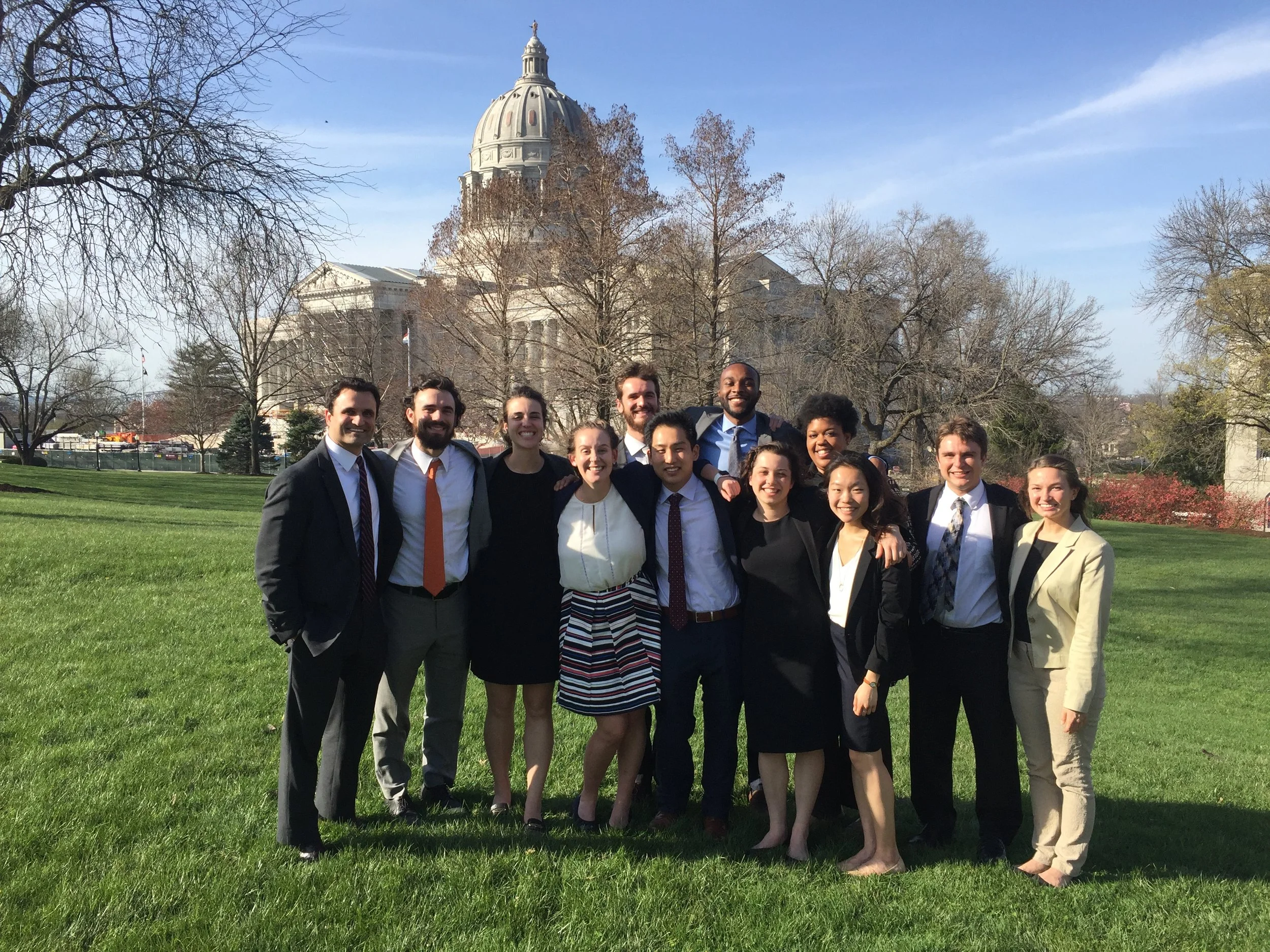
[KRUEGER] The most impactful experience I had in Coro was our State Affairs Week during which we traveled to Jefferson City - the capital of Missouri - to learn about state affairs, but also to understand the lawmaking process, the lobbying process, the legislative process, and the many ways that sausage is made in “Jeff”. We were there at a really fortuitous, auspicious time. The governor had been the subject of a very intense investigation concerning an extramarital affair, blackmail, and serious campaign finance violations.
The news broke that the Republican leaders of the House and Senate were going to move to impeach their also Republican governor. So it was a very exciting time. Lots of rumors and chaos flying around the Capitol, and two of our members in my cohort were actually in the room at the press conference where the Republican leaders announced they were moving to impeach the governor and had credible evidence that he had committed these various criminal accusations. It was also towards the end of session, so there were a ton of bills getting debated and finalized, both on the floor and in the hallways.
We had unbelievable access to those types of conversations and learned so much. I think it was really impactful because it was the closest that I got in my time in Missouri to empathizing with and understanding the position of people who are diametrically opposed to me on the political scale. I ended up spending most of a day in Jefferson City with Representative Mike Moon (now Senator of the 29th District), who is a radical libertarian among the most conservative members of the conservative caucus. We talked about a million different topics that just came up to him across the day. He was extremely kind to me. We disagreed on almost everything we discussed. But that wasn't the point.
The point was that I got to learn from somebody who treated me with kindness and access and empathy about why he believes what he believes and why his vision of public life is so different than mine. That's the type of experience that I think really exemplifies Coro.
It's not how I engage in public life now; now I'm much more opinionated and direct. But it's an amazing way to learn, and it's an amazing way to try to build bridges and understand in a world that's so polarized and in a state that is so polarized, and I think that's a really valuable skill that is underdeveloped in our political life right now. Coro really helped me learn to build bridges, understand other people in public life, and approach public life with curiosity, openness, and fact-based inquiry.
“We had unbelievable access to those types of conversations and learned so much ... It was the closest that I got in my time in Missouri, to empathizing with and understanding the position of people who are diametrically opposed to me on the political scale ... I got to learn from somebody who treated me with kindness and access and empathy about why he believes what he believes and why his vision of public life is so different than mine. That’s the type of experience that I think really exemplifies Coro.”
What advice or feedback did you receive in Coro, if any, that remains meaningful to you?
[KRUEGER] I can't even put my finger on one piece of advice or feedback I received in Coro, because it was such a powerful learning experience for me. I think it really helped me understand how to be a leader from the middle, which is a concept that our cohort talked a lot about.
I had previously almost subconsciously - without really thinking too hard about it - internalized the model of leadership in which leaders are those who are visible, those who are vocal, those who set the direction from the top. I'm thinking of politicians giving speeches to direct a policy, or CEOs or non-profit leaders, inspiring by speaking and directing their staff. I had a sense that leadership meant being at the top, being visible, being vocal, being loud.
I really came to understand that it worked with both my style and my vision of what leadership and power looks like, to adopt a leading from within, leading from example, leading by moving with others, and cooperating with others, and not being the biggest or the loudest or the most visible. Instead it is working to move everyone that you're on a team with towards a common goal, by being the connective tissue among each other, helping build consensus, helping understand where there's disagreement and why, thinking about the values that drive other people's decisions.
Looking for public life as a place of a site of cooperation, not a site of primarily expression - I think that was really deep for me to overcome some internal biases and subconscious assumptions that I had made, learn a new style of leadership that has served me incredibly well, helped me serve the teams that I work on, work closely with the people that I work with, and most importantly, bring the values that I want to live my life under to bear on the teams that I belong to in ways that are much more effective than my previous vision.
Describe a time you've used Coro tools in your professional life.
[KRUEGER] I use Coro tools in my professional life literally every single day!
The most common one that I use almost every day is that every meeting needs to have an agenda, and that's a radical improvement in productivity for every team.
I also use the FAIO (Fact, Assumption, Inference, Opinion) tool, again, almost every day. It's so deeply ingrained in my thinking that I almost don't think of it as a Coro tool. It's a really helpful way to just sort out what someone telling you. For example, is it a fact? Is it a demonstrable, empirical reality in the world? Is it an inference? Is it something that they have drawn based on other facts? And if so, what are those facts, and how do you understand them? Is it an assumption, meaning something that they think is true, but without factual evidence, or is it an opinion? Is it something that expresses their view, their point of view, their own conclusion as distinct from a factual inference or assumption?
And I use that every day as a lawyer, because it really helps clarify when I'm reading a document or typing a document. What am I getting across? Am I trying to make a factual argument? Am I trying to persuade someone to hold my opinion? Am I trying to attack assumptions of somebody else's argument? Or is there an inference with these facts that I agree with? I may agree with the facts, but I disagree with the inference. That's extremely helpful.
Then probably the most important Coro tool of them all that, again, I use every day, is thinking critically about how to ask a clear question that gets you a factual answer. So the simplest level is to start with a question word: who, what, when, where, or how. Never make an assumption within your question, or if so, identify it as such. Ask a question that can be answered through factual analysis instead of one that offers an opinion, or elicits an opinion, and ground your question in genuine curiosity. Don't assume that you know more than you do. Be honest about what you don't know. People are quite often very receptive to that and want to tell you facts when you acknowledge that you don't know what's happening right now or you don't know the background.
All of these tools have given me a set of practices that I use so often that they have become subconscious. They've made me a better leader, a far better attorney, a better advocate for my clients, a better person, a better friend. I just can't emphasize enough how thinking logically and clearly about the facts of this world helps in every endeavor that you want to do, and Coro gave me those basic tools, which I will hopefully use forever.
“All of these [Coro] tools have given me a set of practices that I use so often that they have become subconscious. They’ve made me a better leader, a far better attorney, a better advocate for my clients, a better person, a better friend. I just can’t emphasize enough how thinking logically and clearly about the facts of this world helps in every endeavor that you want to do, and Coro gave me those basic tools, which I will hopefully use forever.”
Who do you think would benefit from the Coro experience today?
[KRUEGER] I would emphasize that I think more people from distinct walks of life can benefit from Coro than you may expect. Coro works especially well as a pre-professional development program. I did it the year after I graduated college, as did five other people in my cohort. And it gave me tools that I think advanced my career, as much or more than my law degree. But, we also were super lucky to have six people who were not immediate recent grads of college, and I would strongly encourage people who are in a mid-career area, or perhaps have gone one or two rungs up their career ladder and want to see how they can get to rungs five and six to strongly consider Coro.
The tools that it gives you are the kind of tools that you may think you have picked up over the first two, five, or ten years of your career. And not only are you going to learn so many more tools, you're going to learn to use them in very distinct, broad, and deep circumstances. You're going be exposed to political and social and cultural insights that you probably have not ever had any opportunity to do. You're going to learn from people who are so distinct from you, and you're going to be part of a program that has an incredibly strong, powerful, and deep network. That can help you, no matter where you are in your career.
For more than 50 years, the nonpartisan Coro Fellows Program in Public Affairs has equipped emerging civic leaders in St. Louis to better understand how decisions are made, how complex policies are shaped, and how to influence meaningful change.
Up to twelve Fellows are selected each year to participate in St. Louis’ program from a highly competitive national applicant pool for the seven month, full-time, graduate-level leadership training program. Throughout their program year, Fellows have rich interactions with private, public, and nonprofit decision-makers while immersed in intentionally ambiguous and stimulating environments designed to support their growth and development in a collaborative, peer-to-peer learning space.