
Featured Alum: Brittany Jones (‘19)
Since 1973 the Coro Fellows Program in St. Louis has developed civic leaders by immersing them in rigorous, experiential, and community-based leadership training that prepares them to contribute to the health and sustainability of our country’s democratic processes. Read this feature to learn how this alum utilizes Coro tools and experiences in their career.
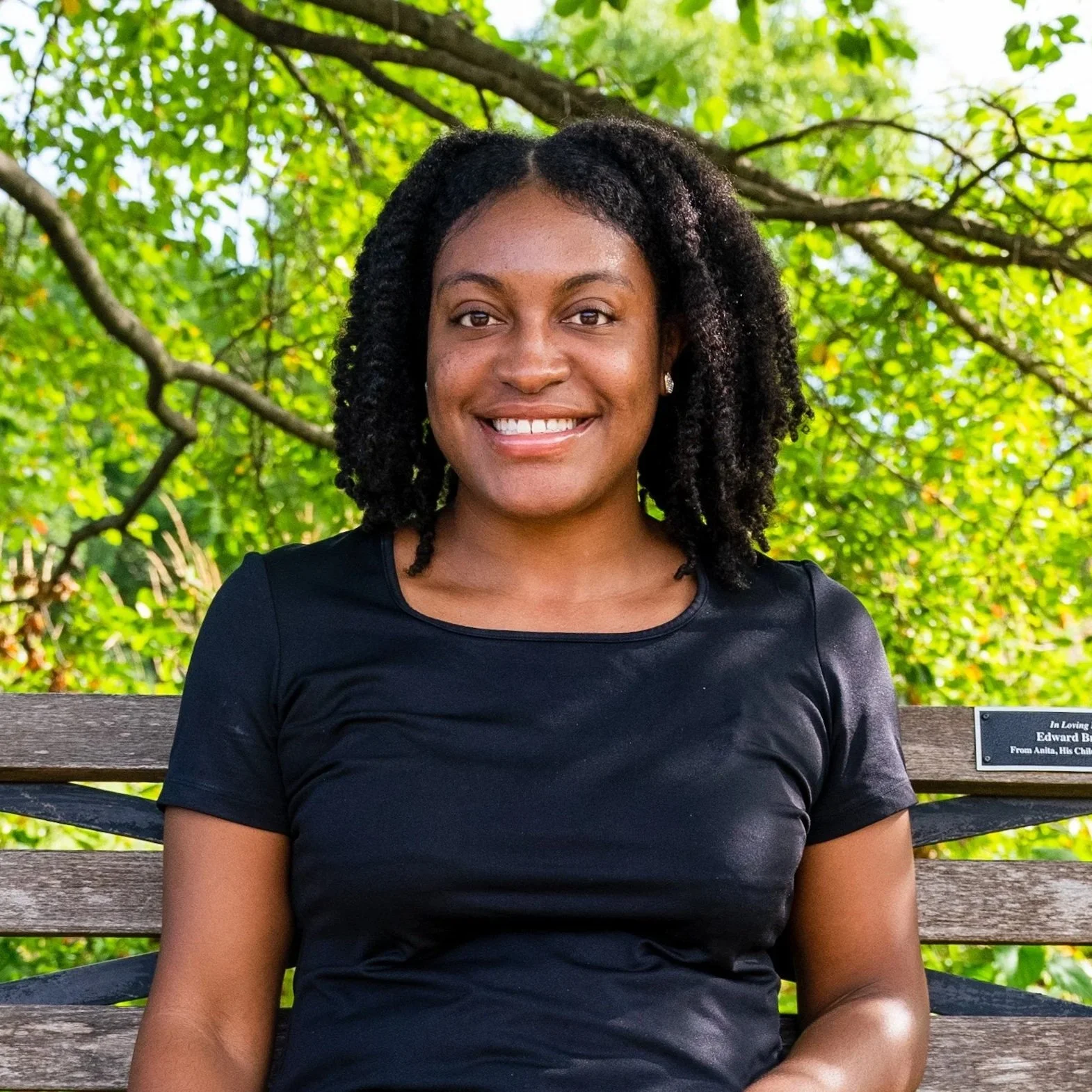
Brittany Jones (‘19)
Director of Community Driven Innovation and Racial Equity Initiatives
St. Louis Integrated Health Network
Brittany Jones is a transplant to St. Louis, by the way of Richmond, California. She has 10+ years of lived and working experience navigating the social and health services field and is confident in her purpose as a leader, weaver, connector, and visionary. Brittany is affirmed by her career in organizing, project management, facilitation, and capacity building in the realms of reproductive justice, food justice, health equity, and liberatory systems change. She currently leads as the Director of Community Driven Innovation and Racial Equity Initiatives at the St. Louis Integrated Health Network.
By academic training, Brittany is a public health social worker which guides her head and heart space as she views and navigates her work and beliefs. She holds a dual master’s degree in Social Work and Public Health from Washington University in St. Louis and a bachelor’s degree in Social Work, Criminal Justice, and Psychology, with a minor in Counseling and Social Change from San Diego State University.
Note: answers have been edited for clarity.
What factors led you to pursue the Coro Fellows Program in St. Louis?
[BRITTANY JONES] When I applied to be a Coro Fellow I had just completed undergraduate school, and as a first-generation college student, I didn't know exactly what I wanted to do. I knew I was passionate about social work, and I also knew that I loved systems change work, but I didn't know what that looked like in practice. And so I knew that I needed to refine my leadership and professional development skills, and was referred to the Coro Fellows Program.
I'm originally from Richmond, California, so I had two Coro options in-state: San Francisco and LA. But I was curious about leaving - I didn't really know much about the Midwest, didn't really know much about Pittsburgh; didn't know much about areas outside of the West Coast. And so I just wanted to try and see, and I knew that I could always go back if I needed to. Now I'm still here in St. Louis and it's almost eight years later.
What experiences did you have as a Coro Fellow that contributed to your personal growth?
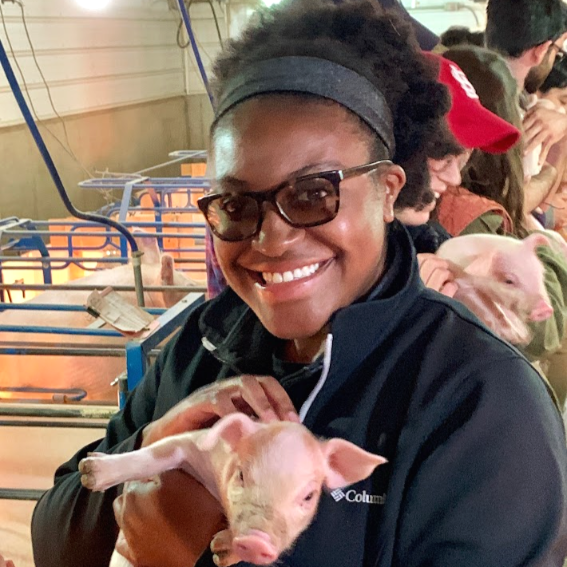
[JONES] The agriculture experience was definitely a pivotal time for me. I didn't know much about our local food sources or agriculture in general, and we were talking about topics like farming, advocacy, and farm-to-table. So that was really inspiring to me to learn more about that from the realms and the eyes of a true local food producer. Given that, it's funny how now I’m working within food systems!
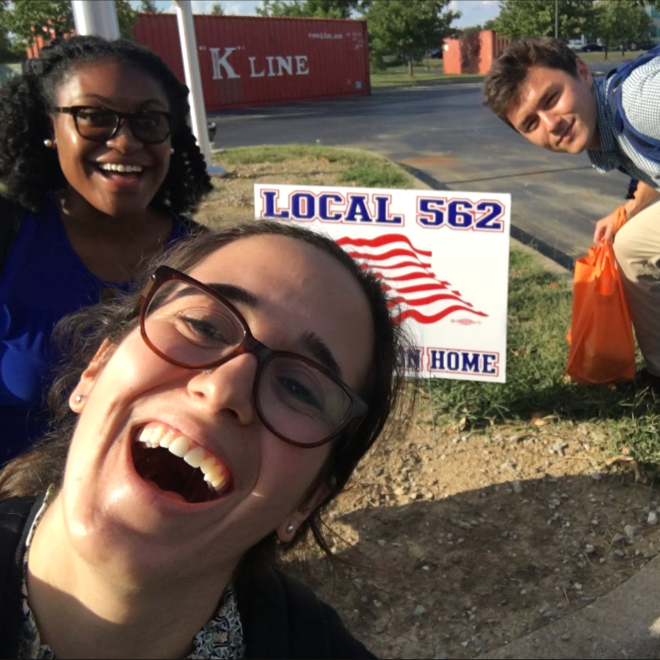
The campaign placement was insightful for me as well. It made me look at things in a different light. Neutrality came into practice, as well as the ideas of, “How do you work together across lines?” and “How do you get to the root of what people care about?” Those things came up for me quite a bit, which was helpful for me despite some difficult experiences that I had.
How, if at all, did being in a cohort setting support processing some of those more challenging experiences?
[JONES] It was very helpful because I felt like I had support at all times when I was not able to be with the trainer. There were some times where it was very challenging, and to have other people to see and witness that and also be willing to pull me away from certain situations was helpful. So I definitely appreciated the cohort experience because our different backgrounds also allowed for different perspectives and to be able to pick up on different things, tell the story in different ways; I found that to be comforting in many ways.
“Being in Coro really taught me to embrace curiosity; to walk in and assess or investigate, to not let things be at face value, but try to understand where it came from.”
What do you feel were some of your biggest changes in your personal growth through your time in Coro?
[JONES] I learned to project my voice. I definitely was a bit on the quieter side coming into Coro, and Coro helped me find a little bit more confidence and delivery in my presentation. But what I also found that was very helpful during Coro is the intentionality around reshaping and reinstalling curiosity.
I feel like along the line somewhere we lose the sense of curiosity or we lose the permission to be curious from childhood into adulthood. Being in Coro really taught me to embrace curiosity; to walk in and assess or investigate, to not let things be at face value, but try to understand where it came from. That really allows you to unlock things that you didn't know and allows you to be able to be more creative, especially when we're thinking about solutions. And now I take that into my professional career, wanting others to be more curious and embrace the things that we were probably told to stop being or doing at a certain age.
What have you seen become possible when people lean into that curiosity?
[JONES] I've seen more disruption - in a good way. A sense of humanity is brought into the space and into the work. I think that when we allow ourselves to be curious and creative it opens up the space for people to bring their own individual talents and their own dreams and their gifts into the work. It also allows us to ask bold questions around, “Is this really serving us? What else is out there?” or “Can we recreate or reinvent something of our own?”
It allows us to challenge in a healthy way; challenging things that are no longer serving us. It also allows us not to be afraid because not everything is “cookie cutter”. What serves this community might not serve that community, and that's okay. The more we're comfortable with that understanding, it allows for the process to change and for more diverse thought and appreciation.
“Some of the interviews we conducted have been lasting for me and have also given me a chance to continue to work with people who I’ve met through Coro.”
What is one of the most impactful or memorable experiences that you had while in Coro?
[JONES] I had a really good time at my placement with Explore St. Louis. The thought of a communications, marketing, social media position still doesn't feel like it would be the right one for me, but when I think about storytelling and work like Lindy [Drew] with Humans of St. Louis does, those opportunities to be able to share a story or share the greatness of your city is something very beautiful. I also loved my independent placement [St. Louis Integrated Health Network], which is where I currently work now. I think there were plenty of really great experiences throughout my time as a Fellow. Some of the interviews we conducted have been lasting for me and have also given me a chance to continue to work with people who I've met through Coro.
What about your independent placement with the IHN made it so impactful for you?
[JONES] Two things. I think the commitment to health equity is something that made me know I wanted to stay working with them. From the internal processes around doing racial caucusing work to the role of being a weaver for the healthcare safety net was very inspiring to me.
And then secondly, it felt like anything was possible at the IHN. Even down to my placement projects, I was able to truly design something that benefited one of the programs. I still have that experience of creativity to this day; just being able to think outside the box. That creativity being fostered is important, too, from me being a Coro Fellow there to now being an employee of seven years. I haven't lost that spark and that freedom. Also, prior to being full-time at the IHN I was doing some reproductive justice organizing work, and I was able to integrate that into my work as well. It reaffirmed that the possibilities are endless when it comes to health care and public health issues. I love that.
How would you describe the influence that your experience in Coro has had on your style of leadership?
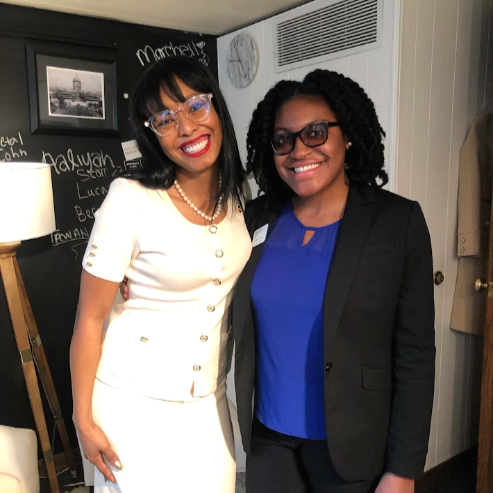
[JONES] One of the challenging things around leadership that I had during my time with Coro was the idea around professionalism. There are some aspects of that that I have changed within my leadership style. I believe that there is space for people to be authentically themselves within the workplace that may or may not look like our traditional context of professionalism. It’s important to me to make sure that there’s room for that, because I've seen direct outcomes through authentic interactions with community.
I'll also say that just a couple days ago, my friend who I also work with called me the “Excel Queen” because of my excessive planning, documenting, and using the tools that I have handy. Our previous CEO at the IHN (Bethany Johnson-Javois) was a Coro Fellows Trainer at one point, and so agendas or the rule of “No Surprises” was further instilled within me once I began working at IHN and have continued to live by. I just can't get away from it; nor do I want to get away from it! I think there's power in agenda setting.
Also, facilitation. A co-worker of mine recently asked me if I went through any facilitation training. And I was like, “I'm not sure. Not really, but I kind of did with Coro.” So it's interesting that those are some of the tools that have been ingrained into me so that I can be an effective and direct leader within spaces, and not realizing that those are things that some people look up to or they find helpful.
How else have you used tools you learned in Coro in your professional life?
[JONES] I definitely have used a lot of the facilitation techniques. Right now, I am exploring different performance evaluation methods. The one that we have is okay, and I was thinking back to practicing peer-to-peer feedback like we did in Coro and how rich it was in my experience. So now we're exploring that within the organization, and I'm spearheading that work. It's one thing to have a direct supervisor and a direct report, but what does it look like to be accountable and responsible to your peers within the work?
Where have you found neutrality to be most useful?
[JONES] Right now, within my work, I am co-leading a local collaborative called “Empowered Thriving Communities” which is guided by local food producers. This is a space where I truly feel like I can weigh in, but my positionality is to help cultivate. That's where I'm able to really practice being neutral, because everyone has different ideas and experiences and relationship to the work as food producers. It is an honor and privilege to be the convener and weaver. I take a lot of pride in being able to be in that position; it's not centered around what I want and see, and I can exercise being able to see things that people may not see because I'm not a food producer, and vice versa. So I definitely appreciate that.
What advice or feedback did you receive in Coro, if any, that remains meaningful to you?
[JONES] There were a few instances early on where my peers made statements that they wanted to hear from me more, or that they found things that I would say to be valuable. And that has stuck with me. Because, like I said, I was on the shyer side coming in, and I think it was probably just some imposter syndrome that I was experiencing.
So I carry that forward with me now and try to make sure that I am, well, what we like to say at the IHN is “coming in as an exclamation point and not a question mark.” Making sure that I am saying the things that I feel on my heart and in my gut, whether I think it's going to be uncomfortable or not; making sure that my voice and my experience is being added into the room, because what's the point of being there if I’m not sharing? So, that permission and that acknowledgment from my peers has definitely helped me. And then also for others who I see might be a little bit more on the quiet side, making sure that they have opportunity to share in the space, too.
“If I did not go through Coro, I still wouldn’t have an idea of who all makes up the public sector. That’s something that’s not taught in schools and it’s not taught when you’re actually within the career field.”
What impact would you say St. Louis has had on your perspectives of leadership?
[JONES] The first thing that came to my mind is relationship. It's so important when you're meeting with people to think about how this can be an opportunity to actually develop a real relationship with someone. And so, I do appreciate those times - and not in a way that's manipulative - but what I've seen from being in St. Louis is that there is a deep emotional connection to the work, regardless of what field you're in.
There's a deep connection to the work; not everything is urgent and not everything has to be emergent. It's really important to slow down and be willing and open to try to develop a relationship or get to know people because you never know when you're going to need them. You just never know the influence you can have, or the influence that they can have on you. Just moving in that space of openness, of curiosity, of wanting to understand, is so important.
What else would you like to share about your experience in Coro?
[JONES] Going back to reflecting on my personal experience with education and things of that nature, what I've appreciated about Coro is the true work that you all have put in to make sure that Fellows have a very well-rounded experience in understanding the public sector. If I did not go through Coro, I still wouldn't have an idea of who all makes up the public sector. That's something that's not taught in schools and it's not taught when you're actually within the career field.
So it has definitely been a privilege to be able to say, “I know the government system” or “I know labor unions, I know agriculture”, because you just never know where your life and your trajectory will be, the topics that come to mind that you can speak to, or the new connections that you can build. And so that alone is very powerful. I commend Coro for the intentionality in creating that space for Fellows.
For 50+ years, the nonpartisan Coro Fellows Program in Public Affairs has equipped emerging civic leaders in St. Louis to better understand how decisions are made, how complex policies are shaped, and how to influence meaningful change.
Up to ten Fellows are selected each year to participate in St. Louis’ program from a highly competitive national applicant pool for the seven month, full-time, graduate-level leadership training program. Throughout their program year, Fellows have rich interactions with private, public, and nonprofit decision-makers while immersed in intentionally ambiguous and stimulating environments designed to support their growth and development in a collaborative, peer-to-peer learning space.