
Since 1973 the Coro Fellows Program in St. Louis has developed civic leaders by immersing them in rigorous, experiential, and community-based leadership training that prepares them to contribute to the health and sustainability of our country’s democratic processes. Read this feature to learn how this alum utilizes Coro tools and experiences in their career.
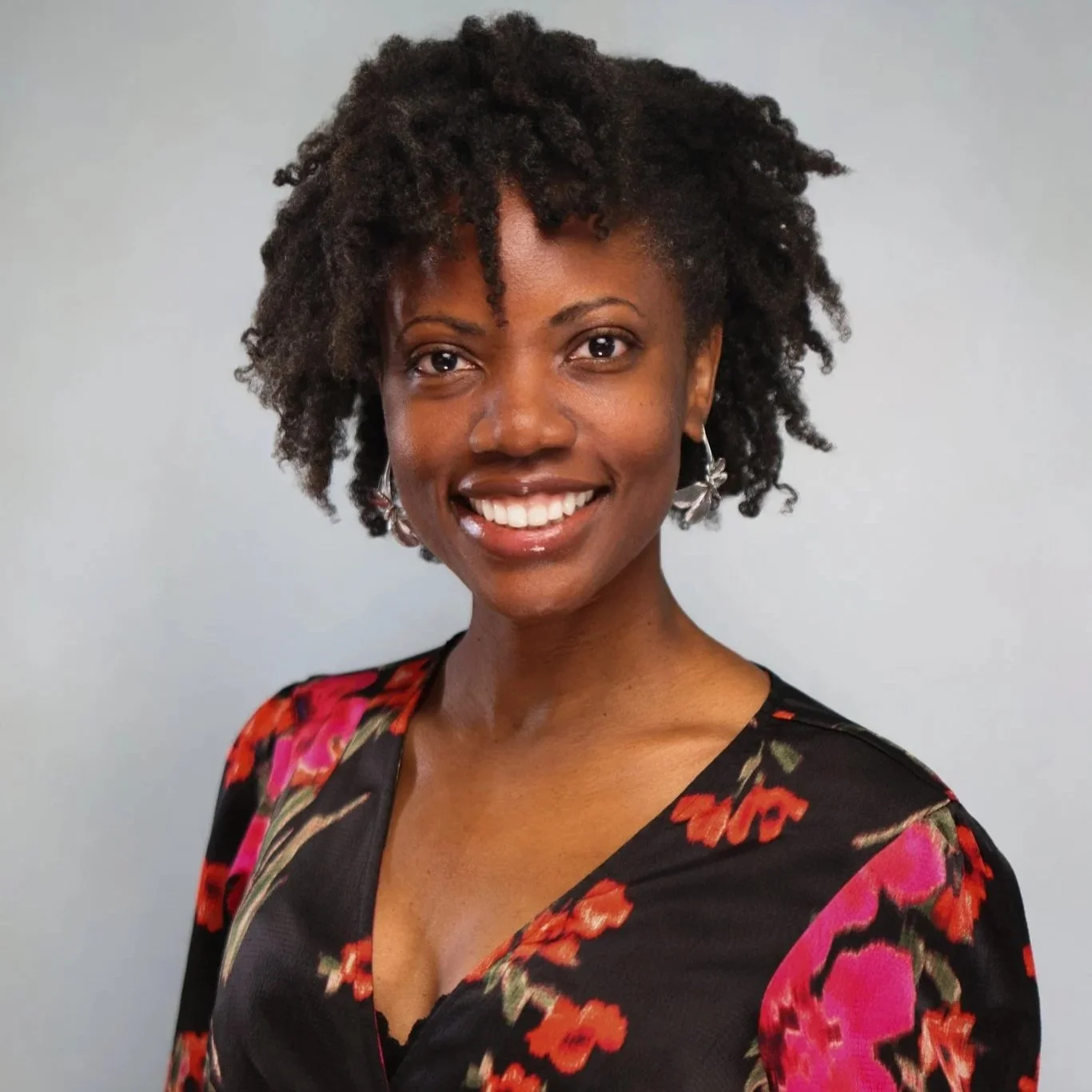
Tonjala Eaton (‘05)
Consultant
Global Learning Partners
Tonjala Eaton is a strategic learning architect, executive coach, and cross-sector leader dedicated to building high-performance organizational cultures. As a Coro Fellows Program alumnus, Tonjala leverages a deep understanding of systemic alignment and cross-sector dynamics to help organizations bridge the gap between business strategy and human potential.
Through her consulting practice, she specializes in designing transformative learning experiences rooted in advanced adult learning principles (Dialogue Education), shifting corporate training from passive consumption to active behavioral change. Tonjala’s expertise spans leadership pipeline development, strategic career mapping, and talent retention framework design. Her work consistently drives high-impact outcomes for national consulting networks, boutique outplacement firms, and community-centric enterprises. She often partners with organizations looking to accelerate leadership readiness and improve workforce retention.
Tonjala resides in Birmingham, AL.
Note: answers have been edited for clarity.
What factors led you to pursue the Coro Fellows Program in St. Louis?
[TONJALA EATON] I remember the first time I learned about Coro. I went to Emory University for a career fair, and I had the brochure in my hand, and I was like, “Wow, I can do all this in 9 months!” And that really piqued my interest, because at that time in my life, my “Plan A” had not worked out. I graduated from Dillard University with a degree in International Business and Spanish, and thought I was going to go abroad and get my international MBA in Mexico, but my language skills weren't really at the level that I could be sufficient in that international MBA program.
I was kind of like, “Okay, what now?” Because that was the vision, that was the goal. So when I went to the career fair and saw that brochure, I was just like, “This is what I want to do.” Because it gave me such broad experience in a very limited amount of time. And I brought the brochure back to Alabama with me, and I was just asking my mentors about it. And my mentor, Bettina Byrd-Giles, was like, “I know someone who's an alum of this program,” and Will Johnson became a close friend of mine from that moment of knowing he did Coro; he helped guide me through the process.
He had done Coro out of New York and being from Alabama, I wanted to experience what it was like working in New York. That didn't work out, but I'm glad St. Louis did. I think in reality, St. Louis was probably a better fit, and my cohort was absolutely great - a subgroup of us were just texting this weekend - so it worked out for the best!
I was at a point in my life where I just needed some more guidance of what was out there and Coro fulfilled that need for me of trying to understand what's out there. Because I was always focused on business, I didn't know much about public policy beyond a program I’d done in college and I didn't really know about public administration. I had worked on a political campaign before as a canvasser but wasn’t around the decisions in the campaign. Coro was an excellent foundation to just give me a lot of exposure in a short amount of time.
What experiences did you have as a Coro Fellow that contributed to your personal growth?
[EATON] Everything. It wasn't just one experience. It was the content itself. Gertie O’Leary was our trainer and she was just a fabulous facilitator and that's when I fell in love with facilitation - seeing how a group can start at one point on a particular piece of content or idea and, through this structured process, really move along and accomplish goals together and achieve group consensus.
It was my first exposure to systematic consensus-making from that regard. I have participated in the act of consensus-making in other groups, but having to think about how a group makes consensus was essential - the facilitation, the questions. So, I pride myself on being a good question-asker. I got that in Coro. I really developed those skills of formulating and asking open-ended questions so that you get a broader range of answers. All of that came from my Coro experience and I use it today. I would like to think I'm known for powerful and thoughtful questions as a facilitator and for supporting group consensus. I'm thinking about a client that I worked with through Global Learning Partners, the ASPCA, and we were brought on for that particular reason - to help the group make some consensus and move forward. So, I think it's safe to say that if I hadn't done Coro, I probably would have been on a different path because I just wouldn't have known. I left Coro saying, “I want to facilitate.”
“I pride myself on being a good question-asker. I got that in Coro. I really developed those skills of formulating and asking open-ended questions so that you get a broader range of answers. All of that came from my Coro experience and I use it today. ”
What are some of the more impactful experiences that you had while in Coro?
[EATON] It's so hard to choose just one, but… I think my placement at Old North St. Louis Restoration Group was very impactful. So at the time that I was working at Old North, there was a man named Sean [Thomas], who was the director; and Irvetta [Williams], who's a good friend that I'm still in contact with.
At that time, the lot across the street from Old North hadn’t been developed. So to be a part of this organization where there was such a long vision for community development, you know, 'cause we're talking about ’04, ‘05, and now it's 2026, and to look back and see how the community is flourishing… I can remember being in the office and there was a blueprint for the renovation - the storefronts that were going to be in the area, and it became what it is now, you know?
So for me, as someone who is a visionary and leans into visions for the future, that's one of my early examples of an organization having a long-term vision for the future that it continues to work towards and to continue to nourish. That was for me just a phenomenal example of commitment, perseverance, and community development.
How would you describe the influence of Coro on your style of leadership?
[EATON] I think for me, Coro was probably a really good example of servant leadership and what it looks like to lead from different capacities. So going into Coro in my early 20s, leadership probably for me was very “in front” - the person leading from the front of the room. Coro really taught me how to lead, but also how to use influence as leadership. Those are things that I still hold on to today.
I remember when I began working at Lansing Community College and I had an intern. I love working with interns because it's almost like a mini-Coro experience for me. We had this major event and I think he was surprised because although I was the leader of it, I was also a person running around doing things. I told my intern Michael at the time, “Leading is doing.” I think that’s something that he still holds dear, and I hold dear.
An example of that really came from Coro - how to take off the mantle of leadership and really understand each person's contribution to a project. And that the leader is not just the person in the room. It's very much the participant, the contributor, and people influencing a project from multiple sides. That is core to who I am and it also allows me to demonstrate a certain level of humility and stay in curiosity because I know that I may be tasked with this responsibility, but the information that we may need can come from so many vantage points.
I also remember one time during Coro, there was this whole conversation happening in the cohort, and I don't know if I didn't feel like I had anything to contribute, or I just wasn't contributing. I was so silent, and the conversation was happening around me. And [Coro Fellow] Andrew Butcher said, “Tonj, what do you have? What are you thinking?”
And I offered whatever I was thinking at the time, and he was like, “That's it!” That contribution unlocked so much. He helped me to learn that I did have insight. So sometimes now, even if I'm holding something or just thinking about something, it’s important to remember that I have insight and everyone has insight because everyone has an experience of that moment. And that insight that is unspoken can be the very thing the group needs to move ahead.
When we show up in this space we’re able to make it and mold it. I also needed him to teach me that lesson of confidence and speaking up, and not holding everything. And that when I contributed, it's no longer mine; it's the group's. From there, the group can decide to change it, revise it; you know, do whatever it needs to do for the sake of the group. I didn't know going into that meeting that that would be a significant moment for me.
So I think it's being open that the moments can happen at any time in Coro. You know, it's not designated for a big moment. It can be so casual but so pivotal. Now that we're having this conversation, I think that really does impact how I relate to people so much in my world. It's like, “No, I'm really interested in what you have to say,” and really stopping to hear it.
Sometimes I think we live in a world that's just really crowded with a lot of noise, such that it can be difficult and a little bit uncertain to know, “Oh, my opinion does matter,” or “I do have something to say.” The more that we stop, and for myself - using I statements, that was another piece of Coro - so, the more that I stop and pause, let someone share and validate like, “What is really on your mind?” is kind of giving that moment that Andrew gave to me to other people and really keeping it going.
“So sometimes now, even if I’m holding something or just thinking about something, it’s important to remember that I have insight and everyone has insight because everyone has an experience of that moment. And that insight that is unspoken can be the very thing the group needs to move ahead.”
How have you used Coro tools in your professional life?
[EATON] Every day, honestly. I mean, just even before this call, I'm onboarding a new intern, and I was thinking, you know, “What should be the first activity?” And as we're going through the training, I'm referencing the things that we were just talking about, like, “Okay, I want to give her space to make sure that I'm hearing her insight, and what she has experienced, and as she's applying the content, making sure that she knows that her experience is just as important as mine, because you are able to see something that I'm not able to see.” So, that happened, you know, just this past hour.
Also in the consulting space, working with my clients, the consensus building work that I did comes from Coro. But also, understanding paradigms. [Coro Trainer] Gertie would always mention this paradigm shift and I learned what that meant through Coro. So now when I'm working with a consulting client, I work to understand the paradigm that they are existing in, and where there might be some desired shifts to broaden their current paradigm to make space for their new vision. I do also use tools like WIGO - understanding “What Is Going On” here. When I'm working with a consulting client, I'll lean into that so that I can understand the situation and the context that we're really operating from.
What impact would you say St. Louis has had on your perspectives of leadership?
[EATON] I think the people that I met in St. Louis opened my eyes to new possibilities in terms of work. There was a woman that I had interfaced with during Coro - I didn't work directly with her, but I think Kelley [Dean] worked with her, and through some relationship, I became aware of her work. Her name was Rebecca. Rebecca's level of process that she demonstrated through the tools that she created was amazing. They were so detailed. You could take whatever she created and pretty much use it as a playbook or a manual. She was not only a good facilitator, she also created these awesome products that I just remember wanting to aspire to, to be able to create a document like Rebecca.
I also remember being on the political campaign and working with Adam, and we were talking about consulting. We were asking, “How much experience do you need to be a consultant?” Because I wanted to leave Coro and facilitate right then, and consult right then. I remember being at the kitchen table talking about how I wanted to consult, and they were like, “Well, you do need a certain amount of experience to consult. The consulting comes from the experience.”
I also worked on one project with the AGC (Associated General Contractors); the Construction Training School had already started, but again, it was this exposure for me as a young person that a school can be specifically dedicated for a trade and I had never seen that in Birmingham. The people in St. Louis really opened my eyes to all of these possibilities.
The people that I met in St. Louis were absolute jewels as demonstrations and career models that I could aspire to grow into. I saw people really operating at a very high level with these specific tools that 20 years later I can specifically reference. Like, I could see Rebecca's manuals, and the way she facilitated and really owned the space. And when we held meetings, these tools were the things that kept the meetings and the flow of the meetings together.
It was just amazing to see all of that, and to know that once these nine months are over, these are the role models that you've seen now that you could grow into and take what you've learned from them and really put your own thing on it and become you.
How would you describe an ideal candidate for Coro in St. Louis?
[EATON] Deeply curious. I think for a person to really maximize the opportunity, they have to be in the space of curiosity and wanting to learn, being open. Open to learning new things - so you may come in with one perspective, but then you may find another opportunity or path that is as equally invigorating as the perspective that you came in with. So, I think being open to learning.
Also, supportive. I think in Coro the right candidate has to be supportive of other people's learning just as well as you're invested in your own. Like if there's an opportunity that could be a good fit for someone else’s growth, you direct it to them. And I think the support also shows up when you're challenging one another. Like when Andrew challenged me, saying “Hey, you're needed here.”
Lastly, the right candidate has to be committed, because Coro is such a significant commitment. I don't think in terms of specific backgrounds, because Coro is open to all backgrounds, but I think those qualities for me are some things I lean on when determining if somebody may be a good fit.
For 50 years, the nonpartisan Coro Fellows Program in Public Affairs has equipped emerging civic leaders in St. Louis to better understand how decisions are made, how complex policies are shaped, and how to influence meaningful change.
Up to ten Fellows are selected each year to participate in St. Louis’ program from a highly competitive national applicant pool for the seven month, full-time, graduate-level leadership training program. Throughout their program year, Fellows have rich interactions with private, public, and nonprofit decision-makers while immersed in intentionally ambiguous and stimulating environments designed to support their growth and development in a collaborative, peer-to-peer learning space.