
Since 1973 the Coro Fellows Program in St. Louis has developed civic leaders by immersing them in rigorous, experiential, and community-based leadership training that prepares them to contribute to the health and sustainability of our country’s democratic processes. Read this feature to learn about this alum’s experience as a Coro Fellow in St. Louis and how they utilize Coro tools and experiences in their career.
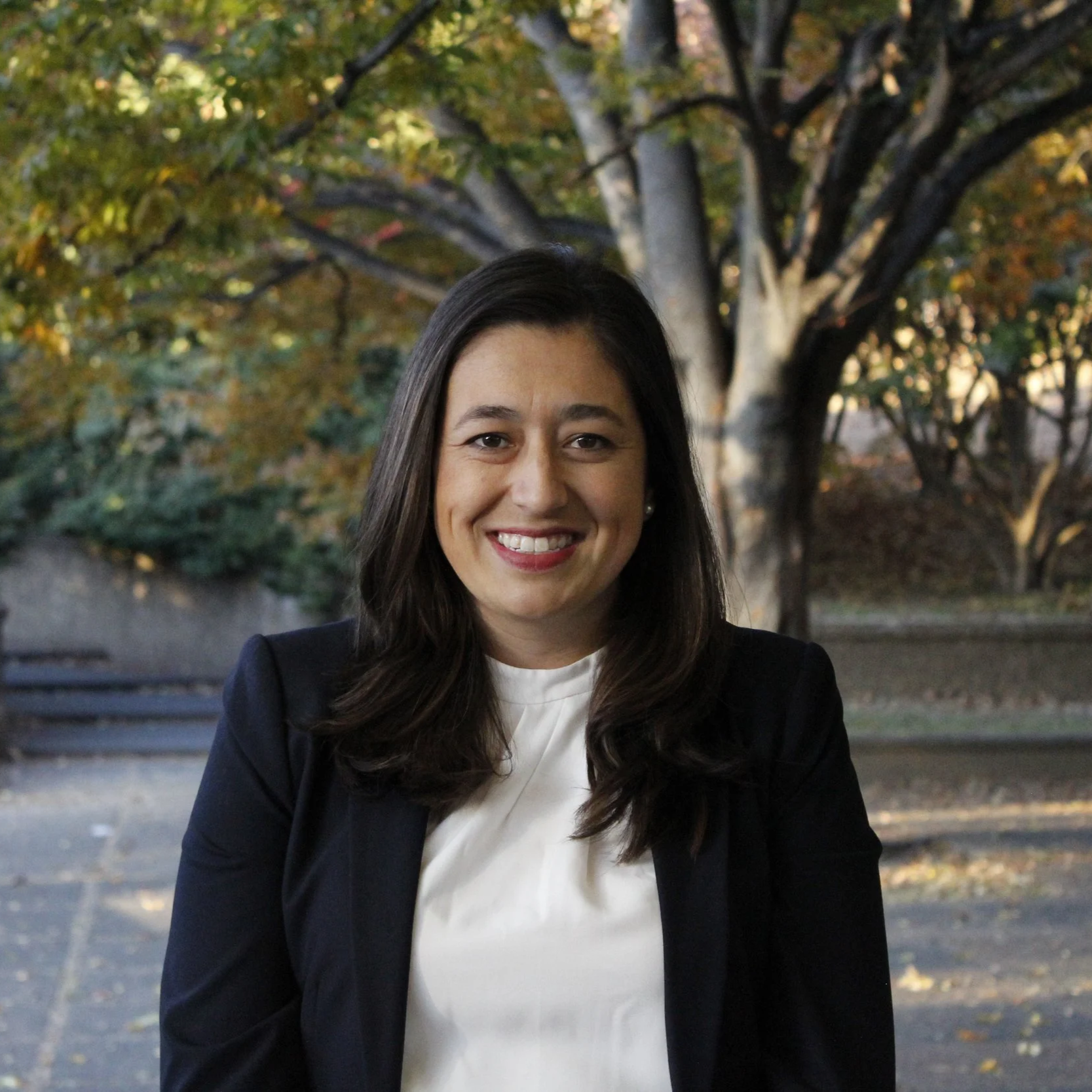
Amanda Kosty (‘13)
Tech Hubs Program Officer U.S. Economic Development Administration
Amanda Kosty has a 10+ year career in economic development and building innovation ecosystems. She currently serves as a Program Officer for U.S. Economic Development Administration’s Tech Hubs program, helping to lead federal government efforts to accelerate innovation, entrepreneurship, and technology-based economic development across the country. In addition, she serves as the program lead for the Build to Scale program and has helped to launch many of EDA’s national programs, including Good Jobs Challenge, and Build Back Better Regional Challenge.
Prior to joining the federal government Ms. Kosty provided technical assistance to community colleges to help develop workforce development programs through the American Association of Community Colleges (AACC); worked as the first employee for a technology-based startup company; and served as a Coro Fellow in Public Affairs.
Ms. Kosty has an MBA from Georgetown University with a certificate in Sustainable Business, and a Bachelor’s degree from Sonoma State University.
Note: answers have been edited for clarity. All views expressed by the interviewee are her own and do not necessarily reflect the views or positions of any entity she may represent.
What factors led you to pursue the Coro Fellows Program in St. Louis?
[AMANDA KOSTY] I had been very involved in student government in undergrad. I was a business major, but really loved learning about the governance process in my college experience. When I was looking for a next step, a mentor who had had another student of his participate in the Coro Fellows Program in San Francisco was like, “I think you'd be a really great fit for this program. You should consider it.”
I’ve always said I joined Coro to learn about the intersection of business, government, and policy without really understanding what any of those three things meant in the real world. So I think Coro spoke to me in the sense that I could have space to navigate and figure out where my passions lied and what I was good at in a real-world setting.
I applied for the program in San Francisco and did not get an interview there, but was offered the opportunity to interview in St. Louis. I’ve told many people that I’m very grateful for that experience because California is my home state and I’d gone to college there as well, so it forced me to try something new and really put myself out there and put myself out of my comfort zone. I didn’t even know where St. Louis was at the time and I would say it worked out for the best!
What was the most impactful or memorable experience you had while in Coro?
[KOSTY] Honestly, learning the “language of Coro” - which sounds crazy. As a Fellow, you learn a bunch of tools like DKDK or 4WH. You don't use those exact names in the real world, but the frameworks still very much apply and those tools kind of stick in your head. I have other more fun stories, but when I think about the biggest value for me, it was being given frameworks to process how you work, project manage, communicate, and close the loop. These are skills that everyone needs. I normally tell everyone, “Everyone in the world should go through a professional development program after college", because college is a lot about gaining knowledge - it's not always about the applicability of it. I feel like Coro was another step for me in understanding how to apply things in the real world, and be responsible and accountable.
Some of the biggest memories were just some of the hard conversations we had. There were 16 people in my cohort, so when you're accountable to 15 other people at all times you're like, “How do we move forward?”. For somebody like me who has not always been great with conflict, it forced hard discussions and a lot of teamwork in a way that I now say that everything in life is a group project. I know people can complain, “It's hard to work together in a group”, but for me, you just have to accept that that's the only path forward. Nobody gets to work in a silo in the world. You have to work together, and I think Coro really forced that mentality.
“When I think about the biggest value [of Coro] for me, it was being given frameworks to process how you work, project manage, communicate, and close the loop. These are skills that everyone needs ... Nobody gets to work in a silo in the world. You have to work together, and I think Coro really forced that mentality.”
What were some of your greatest experiences of encountering new awareness or understanding while in Coro?
[KOSTY] I think a lot of it for me was understanding what assumptions are and being able to acknowledge them and be like, “That's an assumption, let's not run with that,” and kind of being able to force-stop your thinking and actions.
Another was being from a rural community and living in a city with a very different ethnic diversity than the one I grew up in - I’m from a town that’s like 85% Mexican, so it was very different being in St. Louis and not having that be the predominant population.
Also, living in a city that's literally like 20 times the size of where I grew up and getting to understand what community looks like in that kind of environment was very exciting to me, because growing up in a small town you can't go anywhere without running into people you know; to go from that environment to a city where I can go an entire day operating my life and not know anybody I run into - there's a lot of culture shock around that, let alone trying to understand Midwest culture. So, one of the biggest experiences was just the environment of St. Louis; the city itself inspired me in a lot of ways.
Overall, I think learning about the city and the community, challenging my own assumptions, and forcing myself to be in situations where I was very uncomfortable - but forced myself to be brave and confront things and be direct - these were kind of the things I didn't know I needed at that chapter of my life.
How have some of your experiences in Coro informed your professional life, if at all?
[KOSTY] When I was in Coro, I was the first intern they had at T-Rex. T-Rex was very new at the time. Many years later, I ended up in a career of economic development that was inspired by what was happening in St. Louis - trying to build its economic prosperity and business capacity by trying to develop a startup scene in the Midwest. When I got to DC, I was like, “Oh, this is a movement that’s happening across a lot of different cities!” and I now run programs that funded some of that work in St. Louis. So it’s come very full circle.
What advice or feedback did you receive in Coro, if any, that remains meaningful to you?
[KOSTY] There are a few things that I quote monthly from Coro! One of them is actually feedback that a cohort member of mine received. There was another Fellow who was very overwhelmed and struggling - the workload in Coro was really heavy. In this model of everyone must succeed together, our trainer [Keith Clark] told him, “If you can see it, you can manage it.” He said, “What are you overwhelmed about? Write it all down. Once you get it out of your head, you can look at a list and just start checking it off.”
I say that all the time when I've worked with interns or other colleagues and they're feeling overwhelmed. Or when I'm feeling overwhelmed like, “There are too many things, I can't stop thinking about it. I'm going in circles on just all the things that need to get done in my life.” I remind myself: “If you write it down, it's now just another task to check off,” versus the stressful cycle of trying to not forget it, so you keep remembering all of the things. It’s something I talk about all the time with my friends who are dealing with anxiety or stress. I'm like, “Sit down, write it down, let's figure it out.”
Another lesson from Coro that I’ve used is that specificity gives you access. After Coro, I moved to DC and was trying to figure out what I wanted to do. My first connections were reaching out to Coro alumni in DC - there are a million there! One of these alumni connected me to their buddy and I met him for an informational interview over coffee.
Again, I was trying to figure out what I wanted and people were trying to help me, but I was getting feedback that I wasn’t being specific enough. I was really struggling to articulate what I was looking for in a career opportunity. At the end of this conversation, this man told me, “That wasn’t a complete waste of my time, good for you! You know how many coffee chats people go on and they don’t know how to do an informational interview or how to ask good questions?”
He meant it as a compliment, he was just really brash about it; but he really meant it and I took it as such a badge of honor that he was like, “Thank you for having a plan and asking interesting questions, not making me feel like I’m wasting my time or that this is gonna lead nowhere.”
It may sound bad, but that’s kind of a condition of networking - if people don’t have a good vibe from you, they’re not going to want to help you. And he basically gave me his golden ticket of “you get to request whatever introduction you want from me”. I felt like I passed a test I didn’t know I was taking!
But that’s what Coro did for me - there is a skill set for informational interviewing and networking that we constantly were growing. Coro continually forced us to learn by doing, and learning how to ask good questions helped me get more specific with my language when I was asking for things from people and ultimately landed me where I am.
“Overall, I think learning about the city and the community, challenging my own assumptions, and forcing myself to be in situations where I was very uncomfortable - but forced myself to be brave, confront things, and be direct - these were kind of the things I didn’t know I needed at that chapter of my life.”
How would you describe the value of the cohort experience?
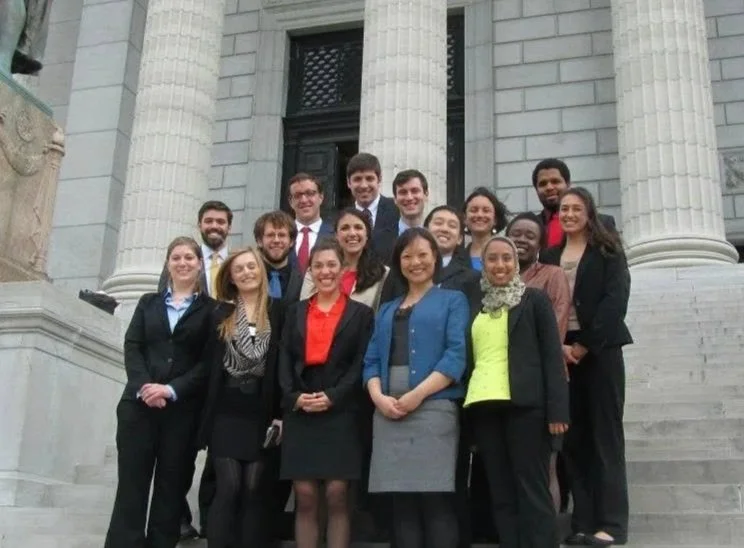
[KOSTY] We used to joke that it’s a little bit like being in a cult because we were really in this experience that nobody else could understand, together. I was 22 at the time, so it was crazy to me that you’re in this very shared experience together where you’re kind of speaking your own language and everyone’s going through their own personal transformation, but having people to support you and really understand what you’re going through is incredibly bonding. It’s something that can be hard to find in adulthood.
I really appreciated having to commit to it full-time, you know, you're working a lot of hours in a week. I was living with another Fellow and we were commuting with a bunch of people every day to and from various activities and programs. It was very valuable and a lot of those people I'm still very close with, and it's everyone's like, “How do you know each other?” We're like, “Let me tell you about this strange experience. It was wonderful, but a very unique experience that we can't really explain the whole value of.”
What value, if any, do you see in Coro being a nonpartisan civic leadership program?
[KOSTY] I think the nonpartisanship is important because ultimately, the program is about how we can better advance public affairs. You're never just going to have one side of that coin to consider in the real world. So I think being nonpartisan and making sure people have exposure to different viewpoints is important to understand how society works. Everybody has to work on a team, and politically you can't really operate in a silo either. You have to operate within all parties and viewpoints and considerations.
How would you describe an ideal candidate for Coro in St. Louis?
[KOSTY] Somebody who's really willing to be open-minded and try new things. I think a lot of Coro is the first-hand experience of trying something and understanding you're going to have to learn problem solving, you're going to have to overcome some really hard days and hard times, some really challenging work in order to prevail, and once you get there it's really satisfying. I think a good candidate is somebody who's very open-minded to hearing people out, trying new experiences, and doing some exploring, while also being willing to put in the hard work.
What else would you like to share that I haven't asked about?
[KOSTY] I’ve met more Coro Fellows alumni from St. Louis than any other cohort and I don’t live in St. Louis! I definitely have gotten more from the Coro alumni network than I have from my college networks. Being a Coro alum is something that does follow you in a positive way.
I met one of my colleagues’ brothers who was a Coro alum, and I was like, “That's crazy!” He participated in a different city and was 10 years before me, but I was like, “Now I know so much about him and who he is as a person.” Of course not that all Coro alumni are the same, but to me it was a very telling sign about him as a person. That kind of alumni status has been incredibly helpful for me professionally, and does kind of follow you and creates a lot of connections. So when I've met other alumni out in the wild it's been very, very interesting, to have that kind of bonding moment.
Lastly, I think Coro gives you an opportunity to explore different avenues of public service. I always wanted to give back and do good and everybody assumes that the way to do that is through nonprofit work, which is definitely one way, but there are a lot of other ways to better society, too. I think Coro gave me exposure to that, of what those different kinds of careers and things could look like.
I started off thinking I was going to be a nonprofit girly forever. I did for a while, I was in a startup company straight out of Coro. After that, I went to a national nonprofit and now I work for the government. All have had very different roles in how you're contributing to society, and I think Coro helped me figure that out as well.
For 50 years, the nonpartisan Coro Fellows Program in Public Affairs has equipped emerging civic leaders in St. Louis to better understand how decisions are made, how complex policies are shaped, and how to influence meaningful change.
Up to ten Fellows are selected each year to participate in St. Louis’ program from a highly competitive national applicant pool for the seven month, full-time, graduate-level leadership training program. Throughout their program year, Fellows have rich interactions with private, public, and nonprofit decision-makers while immersed in intentionally ambiguous and stimulating environments designed to support their growth and development in a collaborative, peer-to-peer learning space.